How to Choose Single Herbal Granules for Global Sourcing?

Time:2026-10-22 Author:Madeline
0%

Choosing Single Herbal Granules for global sourcing requires more than comparing prices or reviewing attractive product photographs. Buyers must examine botanical identity, plant origin, extraction methods, granule size, moisture, and batch consistency. A polished sample can still hide weak documentation.

Professor Michael Heinrich, a medicinal-plant researcher at University College London, has emphasized: “Quality is not optional in herbal medicine.” This principle should guide every supplier conversation. Request the exact Latin plant name, plant part, processing date, certificate of analysis, pesticide results, heavy-metal testing, microbial limits, and full traceability records. Confirm whether the supplier follows suitable GMP systems and whether its documentation supports the destination market’s requirements.

Look closely at the details. Does the granule dissolve evenly in warm water? Is the aroma clean, stable, and characteristic? Do different batches show noticeable color changes? Small differences may reveal storage problems, inconsistent raw materials, or incomplete process control. However, sensory checks are not enough. Laboratory verification remains essential.

Global sourcing also requires practical judgment. A supplier may offer low prices, rapid delivery, and impressive certifications, yet still lack reliable long-term records. That is a warning sign. Ask for independent test results, retain samples, audit rights, and clear complaint procedures. Do not assume one successful shipment proves consistency.

The process is not perfect. Testing costs money, shipping conditions may change, and regional regulations can be difficult to interpret. Still, careful qualification reduces avoidable risk. The strongest sourcing decision balances verified quality, transparent communication, regulatory suitability, supply continuity, and evidence rather than promises.
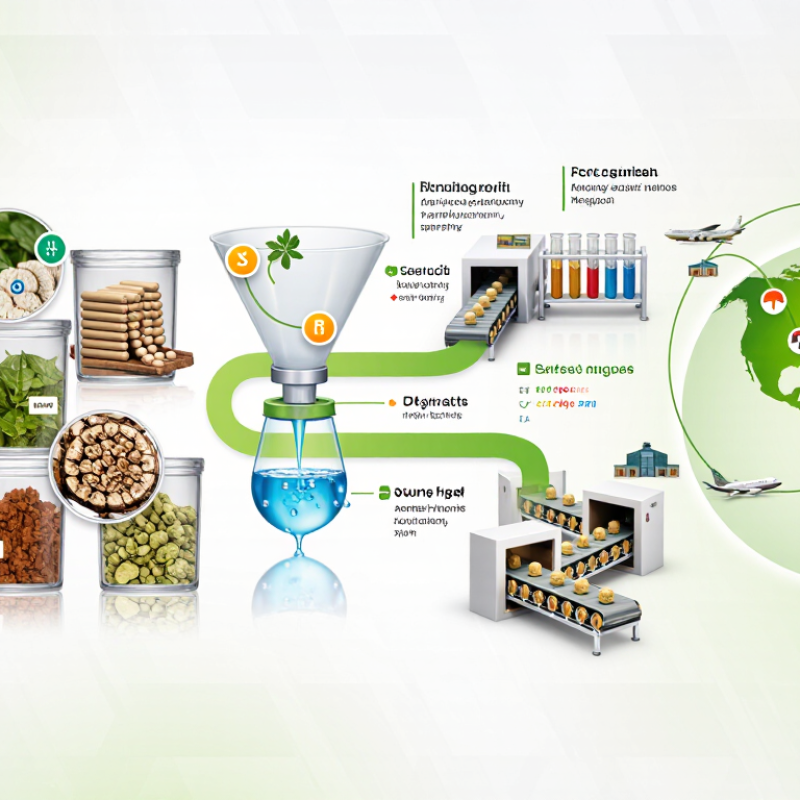
How to Choose Single Herbal Granules for Global Sourcing?

Understanding Single Herbal Granules and Their Global Applications

How to Choose Single Herbal Granules for Global Sourcing?

Single herbal granules are concentrated, dried extracts made from one herb. They are usually dissolved in warm water before use. Unlike blended formulas, they help buyers trace one botanical source more clearly. This makes them useful for traditional healthcare practices, practitioner-led preparation, research, and selected wellness products. Applications differ between countries. A granule accepted for professional use in one market may require additional review elsewhere.

Reliable sourcing begins with botanical identity. Check the Latin name, plant part, extraction method, origin, and batch number. Request testing for moisture, microbes, heavy metals, pesticides, and unwanted additives. A certificate alone is not enough. Review the testing method and laboratory qualifications. Packaging should protect the powder from humidity, heat, and light. Small details matter. I would also compare dissolution, aroma, color, and batch consistency using retained samples. These checks can reveal problems that documents miss.

Tips: Ask for a complete specification sheet and recent test reports. Confirm import rules, labeling requirements, permitted claims, and storage conditions with local experts. Use qualified practitioners when products are intended for personal use. Do not assume traditional use proves clinical effectiveness. Supply chains are rarely perfect, so record deviations and question unusually low prices. A careful buyer leaves room for re-testing before shipment.

Defining Quality, Purity, and Standardization Requirements

How to Choose Single Herbal Granules for Global Sourcing?

Defining quality, purity, and standardization requirements

Single herbal granules need a clear quality definition before supplier discussions begin. Confirm the exact botanical species, plant part, harvest region, and processing method. A root and a leaf may share a common name but have different chemical profiles. Keep the specification practical and measurable.

Request a recent certificate of analysis for each batch, not only a general product sheet. Test results should cover identity, moisture, microbial limits, heavy metals, pesticides, and unwanted adulterants. Ask how the laboratory verified the results. An impressive document is not enough. Review testing dates, methods, detection limits, and sample references. Traceability should reach the farm, processor, and packing lot.

Standardization requires more than stating an extraction ratio. Define marker compounds and acceptable ranges, while recognizing that natural materials can vary. A stable marker level does not always prove complete biological equivalence. This point is often overlooked. Compare three or more production batches before approving regular supply. Check granule size, color, odor, solubility, and packaging performance during transport. Small differences may reveal moisture problems.

Quality systems matter. Look for documented manufacturing controls, trained personnel, equipment-cleaning records, and retained samples. Verify whether the facility follows applicable good manufacturing practices and export requirements in the destination market. Specifications may need revision after real-world testing. That is not failure. It is responsible sourcing. A transparent supplier should accept reasonable questions, disclose limitations, and support independent verification when results appear unusual.

How to Choose Single Herbal Granules for Global Sourcing?

Defining quality, purity, and standardization requirements

How to read this chart: These are commonly used screening specifications for dried herbal extracts and granules. Exact limits must be confirmed against the applicable pharmacopoeial monograph, destination-market regulation, botanical part, extraction ratio, and product form.

Key sourcing principle: Confirm botanical identity first, then evaluate moisture, foreign matter, ash, marker-compound assay, and microbial quality. A supplier should provide validated test methods, batch-specific certificates of analysis, traceability records, and evidence of GMP or equivalent manufacturing controls.

Evaluating Suppliers, Manufacturing Processes, and Certifications

Global sourcing of single herbal granules should begin with supplier verification, not price comparison. The WHO Global Report on Traditional and Complementary Medicine 2019 states that 170 of 194 Member States reported using traditional medicine. Demand is broad, but quality systems differ sharply.

Request the supplier’s manufacturing license, GMP evidence, batch records, and recent third-party audit reports. Review the complete process, from botanical identification to extraction, concentration, drying, and packing.

Identity testing should use macroscopic, microscopic, chromatographic, or DNA methods where appropriate. Test each batch for microbial contamination, heavy metals, pesticides, residual solvents, and undeclared ingredients.

A polished certificate of analysis is not enough. Check laboratory accreditation, test methods, limits, and sample dates.

Certifications need context. GMP supports controlled production, while HACCP and ISO 22000 address food-safety risks. Organic certification may help, but it does not prove botanical identity or potency.

The American Botanical Council’s HerbalGram market report estimated U.S. herbal supplement sales at about $12.6 billion in 2023, showing a mature and scrutinized market. Still, supplier claims can be incomplete. I would compare three retained samples, verify Latin names and plant parts, and inspect traceability back to the harvest region. One weakness remains: testing every possible adulterant is unrealistic. Risk-based testing, documented honestly, is more reliable than impressive paperwork.

Checking Regulatory Compliance Across Target International Markets

How to Choose Single Herbal Granules for Global Sourcing?

Regulatory compliance should guide every single herbal granule purchase. A product accepted as a traditional medicine in one market may be treated as a food supplement elsewhere. Some authorities may classify it as a medicinal product. Check the target country’s category before discussing price or volume. Review import permits, permitted plant parts, dosage limits, labeling rules, and acceptable health claims. Do not rely on a supplier’s general statement that the product is “globally compliant.” That phrase is rarely precise.

Request traceable documents for each batch. These may include botanical identification, a certificate of analysis, pesticide testing, heavy metal results, microbial limits, and stability data. Confirm the manufacturing site follows suitable quality systems and retains complete production records. In sourcing reviews, a recurring problem is an accurate laboratory report linked to the wrong batch. Small details matter. Also verify packaging language, allergen declarations, storage conditions, and shelf-life evidence for each destination.

Tips: Build a country-by-country compliance file before sampling. Ask a local regulatory consultant to review claims and classification. Keep supplier documents, test results, and approval records together. Rules can change. No checklist is perfect, so schedule a fresh review before shipment. A conservative claim is usually safer than an attractive promise.

Comparing Pricing, Packaging, Logistics, and Supply Reliability

How to Choose Single Herbal Granules for Global Sourcing?

Comparing Pricing, Packaging, Logistics, and Supply Reliability

A low unit price can hide expensive quality risks. Compare quotations by active specification, granule concentration, testing scope, and minimum order quantity. Ask whether the price includes laboratory testing, export documents, and protective packaging. A cheaper offer may become costly after retesting or customs delays.

Packaging needs practical attention. For moisture-sensitive granules, use sealed inner bags with strong outer cartons or drums. Check the net weight, batch number, production date, storage conditions, and traceability details. I prefer reviewing sample packaging before approving a full order. It reveals weak seals and unclear labels early. However, packaging choices should match the destination climate, not only the supplier’s standard process.

Logistics planning should include production time, inspection time, transport mode, and realistic customs clearance. Request a written delivery schedule and define responsibility for each shipping stage. Supply reliability depends on more than warehouse stock. Review historical lead times, backup raw-material sources, batch consistency, and communication during delays. One shipment arrived on time, but its documents needed correction. That experience changed my purchasing checklist. Ask for recent certificates, batch records, and a clear corrective-action process. Do not rely only on polished samples or promises. A small trial order can test quality, packaging, communication, and delivery performance together.

FAQS

Why should regulatory classification be checked before buying herbal granules?

The same product may be medicine, food, or a supplement in different countries. Confirm the category before discussing price or volume. Rules differ.

Which regulatory documents should a buyer request for each batch?

Request botanical identification, a certificate of analysis, pesticide results, and heavy metal testing. Also review microbial limits and stability data. Keep every record traceable.

How can buyers avoid matching a report to the wrong batch?

Check the batch number on every laboratory report and production record. Confirm dates, quantities, and manufacturing details. This sounds basic. Errors still happen.

What labeling details require careful review?

Check the destination language, net weight, batch number, production date, and storage conditions. Review allergen statements and permitted health claims. Attractive wording may create problems.

How should herbal granule prices be compared?

Compare concentration, active specifications, testing scope, and minimum order quantity. Ask whether testing, export documents, and protective packaging are included. A low price can hide later costs.

What packaging is suitable for moisture-sensitive granules?

Use sealed inner bags with strong cartons or drums. Review sample packaging before approving a large order. Weak seals often appear clearly. Match packaging to the destination climate.

What should an international delivery schedule include?

Include production, inspection, transport, and customs-clearance time. Request written responsibilities for each shipping stage. Delivery estimates are not always realistic.

How can a small trial order test supplier reliability?

Check product consistency, packaging strength, communication, documents, and delivery performance together. Review recent certificates and batch records. My checklist is never perfect. Schedule another review before shipment.

Conclusion

Choosing Single Herbal Granules for global sourcing requires a clear understanding of their intended applications, formulation needs, and target users. Buyers should define quality, purity, potency, and standardization requirements in advance, including acceptable raw material specifications, testing methods, batch consistency, and documentation. A reliable evaluation should also consider the supplier’s manufacturing capabilities, quality management systems, traceability procedures, and relevant certifications. Transparent production practices and complete technical records can help reduce quality risks and support long-term cooperation.

International sourcing also requires careful review of regulatory requirements in each target market. Product composition, labeling, permitted claims, packaging, import documents, and testing standards may vary between countries. In addition to comparing unit prices, buyers should assess packaging suitability, minimum order quantities, production capacity, lead times, transportation conditions, and supply continuity. A balanced decision based on compliance, quality, service, and total procurement cost will help organizations select dependable Single Herbal Granules suppliers and build a more stable global supply chain.

Madeline

Madeline

Madeline is a dedicated marketing professional with a wealth of expertise in our company's core offerings. With a keen understanding of the industry, she brings a unique perspective to her role, consistently delivering high-quality content that highlights the superior aspects of our products. As......