7 Tips for Sourcing Quality Herbs Worldwide

Time:2026-11-19 Author:Amelia
0%

Quality Herbs are not defined by a label, a vivid color, or a supplier’s promise. Their reliability begins in the field, then travels through harvest, drying, storage, and testing. Each step can change what arrives in a buyer’s sample jar. The details matter.

The World Health Organization’s 2019 Global Report on Traditional and Complementary Medicine found that 170 of its 194 Member States reported using these practices. That scale makes responsible sourcing more than a purchasing task. WHO’s quality-control guidance for herbal materials also highlights the need to assess identity, purity, and potential contaminants. Director-General Dr. Tedros Adhanom Ghebreyesus said, “Traditional medicine is the oldest form of medicine, and it is still used by millions of people around the world.” His observation points to a practical duty: respect traditional knowledge while verifying each batch with modern evidence.

For buyers, that means asking specific questions. Which plant species and plant part were harvested? Can the supplier trace the lot to its growing region? Are test results linked to that exact batch? A certificate can help, but it cannot replace transparent records or independent checks. A neat document may hide a messy supply chain. That deserves scrutiny.

The following seven tips explore how to assess suppliers, inspect documentation, evaluate testing, and manage risks across international sourcing. They are useful starting points, not guarantees. Even careful buyers can miss something; good sourcing leaves room to question, verify, and improve.
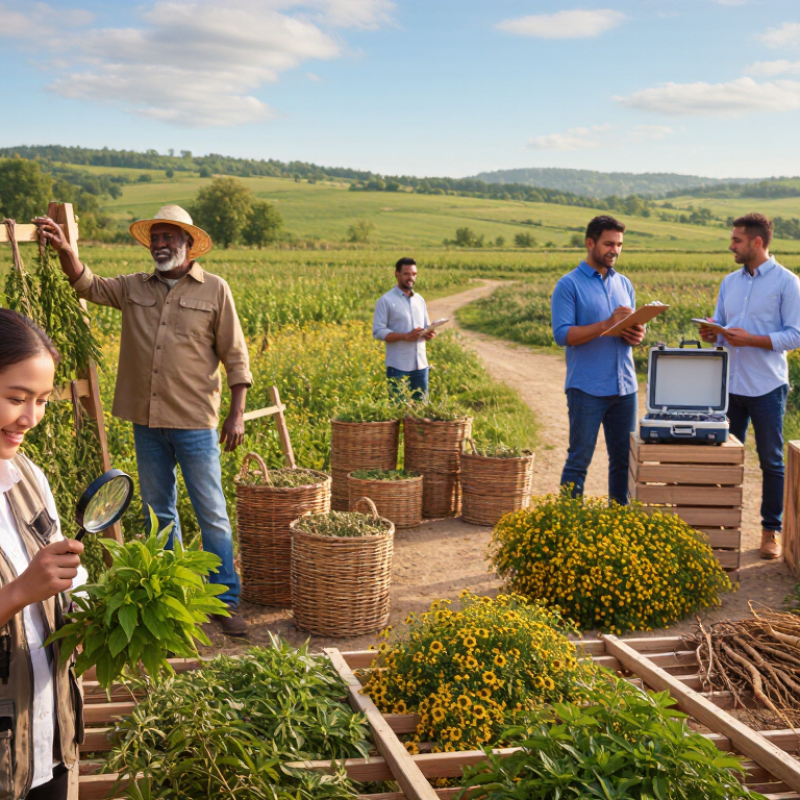
7 Tips for Sourcing Quality Herbs Worldwide

Define Quality Standards and Intended Uses for Herbs

Quality starts with a clear purpose, not a vague request for “premium herbs.” Specify the botanical name, plant part, country of origin, harvest stage, and whether the material is intended for tea, food, or another permitted use. These details shape testing and acceptance limits. The Royal Botanic Gardens, Kew, reported 28,187 plant species recorded as having medicinal uses in its State of the World’s Plants 2017 report. That breadth makes common names risky: the same name can refer to different species.

Set measurable criteria before requesting samples. Define identity testing, acceptable moisture, foreign matter, microbial limits, and relevant contaminant tests. For extracts, also specify the extraction solvent and marker compounds; a marker does not necessarily prove the herb’s full composition. WHO’s 2019 Global Report on Traditional and Complementary Medicine found that 170 of 194 Member States reported use of these practices. Needs and oversight vary, so document the applicable destination-market requirements instead of assuming one specification fits all. Small details matter. Ask suppliers for lot-specific results and methods, then check whether an independent laboratory can confirm them. I would still treat a polished certificate cautiously: sampling errors or an unclear test method can leave gaps. WHO’s Good Agricultural and Collection Practices guidance offers a useful framework for tracing cultivation, collection, and handling from field to shipment.

7 Tips for Sourcing Quality Herbs Worldwide

Define Quality Standards and Intended Uses for Herbs

Quality specifications should match the herb, its intended use, and the markets where it will be sold. For example, EU limits for certain dried spices set maximum levels for aflatoxin B1 and for the sum of aflatoxins B1, B2, G1, and G2.

Maximum levels shown in µg/kg. These limits apply to specified dried spices, including certain Capsicum, Piper, nutmeg, ginger, and turmeric products—not to all herbs. Always verify the current requirements for the specific product and destination market.

Source: Commission Regulation (EU) 2023/915, Annex I, aflatoxin maximum levels.

Research Growing Regions and Seasonal Harvest Conditions

A herb’s growing region tells you more than its country of origin. Compare altitude, soil drainage, rainfall patterns, and daily temperature swings. These factors can affect aroma, leaf size, and essential-oil content. A hillside plot and a warm valley may produce noticeably different material, even when they grow the same species.

Timing matters. Ask suppliers for harvest dates, not just the year. Check whether the crop was gathered before heavy rains, during flowering, or after a dry spell. Each plant has its own useful harvest window, and local growers often know when leaves are most aromatic. Request field-level details where possible, then compare them with regional weather records. Small records help.

Seasonal conditions can change from one year to the next. Drought may reduce leaf yield; persistent humidity can slow drying and raise spoilage risks. Ask how quickly herbs moved from harvest to drying, and whether they were protected from sunlight and damp air. I’ve seen sourcing checklists treat a region as a guarantee. That is too neat. Growing conditions vary within regions, so verify each lot with dated documentation and, when feasible, a representative sample.

Assess Suppliers and Traceability Across the Supply Chain

A reliable herb supply begins with clear questions, not glossy photographs. Ask where each herb was grown, who harvested it, and where it was dried or processed. Request current records for the growing region, harvest date, plant species, and plant part. Keep it specific. A lot code should connect the delivered cartons to field and processing records. Check that dates and quantities agree across documents.

Traceability should follow the herb through storage and transport, not stop at the farm gate. For a dried leaf lot, ask for handling details, moisture results, and relevant contaminant testing. Compare the documents with a retained sample when possible. A clean-looking sample alone proves little. In practice, paperwork can appear complete while a field record is missing. Not every gap signals a problem, but unexplained gaps deserve follow-up.

Assess suppliers through consistent evidence and direct communication. Ask how they separate lots, manage rejected material, and notify buyers when an origin or process changes. Review a recent certificate of analysis, and confirm that the test methods fit the herb and its intended use. A site visit or live video walk-through can reveal practical details, such as labeled drying racks and clean storage areas. Ask again if an answer is vague. Even careful checks cannot remove every uncertainty, so record open questions and revisit them before placing repeat orders.

Verify Herb Identity, Purity, and Safety Certifications

Herb identity begins with the full botanical name, not a common name alone. Check the species, plant part, and country of origin against the purchase documents. A leaf and a root from the same plant are not interchangeable. Request harvest or lot details, too; vague traceability makes later checks difficult.

Ask for a certificate of analysis tied to the exact batch. It should report relevant tests for contaminants, such as pesticide residues, heavy metals, microbes, or mycotoxins. Review test methods, dates, and acceptance limits, rather than relying on a pass stamp. Confirm that an independent laboratory is accredited for the tests performed. Certification has a scope. An organic certificate, for example, does not establish every aspect of purity or safety.

At receiving, compare the packaging label and lot number with the documents, then retain a sealed sample. Look for moisture, damaged seals, or an unusual odor, but sensory checks cannot prove identity. No single test catches everything. For powders and extracts, microscopy or DNA methods may be less useful after processing; chemical fingerprints can offer another check. The paperwork can still look convincing while missing a detail. That is why occasional supplier audits and documented follow-up matter.

7 Tips for Sourcing Quality Herbs Worldwide - Verify Herb Identity, Purity, and Safety Certifications

Tip What to Verify Useful Evidence Practical Sourcing Check
1. Confirm botanical identity Check the accepted scientific name, plant part, and any relevant variety or chemotype. Common names can refer to different plants. Product specification, supplier identification records, and suitable identity testing such as microscopy, chromatography, or DNA methods where applicable. Match the scientific name and plant part across the purchase specification, label, and batch documents.
2. Trace the growing and processing origin Establish the country and growing area, harvest period, and locations where drying, cutting, or other processing took place. Farm or collection records, harvest logs, processing records, and shipment documents linked to the lot. Ask for a lot-specific chain of custody; do not treat the shipping country as proof of where the herb was grown.
3. Assess purity and foreign matter Look for other plant material, soil, stones, insects, mold, or undeclared ingredients, using criteria suited to the herb and intended use. A defined product specification, inspection records, and a representative sample from the relevant lot. Agree on measurable acceptance criteria before ordering and review the sample against them.
4. Screen for contaminants Consider risks relevant to the crop and origin, including heavy metals, pesticide residues, mycotoxins, and microbiological hazards. Recent, lot-linked test results from a competent laboratory, with methods and reporting limits identified. Compare results with applicable destination-market requirements and the buyer’s product specification; limits vary by substance and market.
5. Check laboratory competence Confirm the laboratory is competent for the specific tests and product matrix. ISO/IEC 17025 accreditation is relevant when its scope covers the test. A current accreditation certificate and scope, plus a test report that identifies the sample, methods, and results. Check the accreditation scope rather than relying on an accreditation logo alone.
6. Validate certifications and legal status Confirm that any claimed organic or good agricultural and collection practice certification is current, covers the relevant operation, and is recognized for the intended market. Check protected-species and import rules where applicable. Certificate details verified with the issuing or official registry, product scope, validity dates, and required permits or declarations. Treat certification as supporting evidence, not a substitute for identity testing, contaminant controls, or legal import checks.
7. Secure lot-level traceability and quality control Ensure each batch can be followed through receipt, storage, processing, and shipment, with clear procedures for nonconforming product. Unique lot codes, retained samples, batch records, a certificate of analysis, and documented complaint or recall procedures. Make payment and release decisions against the agreed specification and documents for the actual shipment lot.

Compare Samples, Pricing, and Sustainable Sourcing Practices

Compare suppliers using samples from the same harvest lot, not polished showroom batches. Check botanical identity, cut size, moisture, color, and aroma; request recent test results for microbes, pesticide residues, and heavy metals. Small details matter. I would also compare landed cost per usable kilogram, including freight, testing, and expected cleaning loss. A low quote can become expensive after sorting.

The World Health Organization’s 2019 Global Report on Traditional and Complementary Medicine found that 170 of 194 member states reported use of these practices. That is useful demand context, not proof that any herb is safe or consistently sourced. Ask for lot-level traceability, the harvest region, and whether material is cultivated or wild-collected. Then verify that the supplier can explain seasonal changes in supply and quality. Not just price.

Sustainable sourcing needs evidence beyond a certificate or a reassuring email. The FAO’s 2019 State of the World’s Biodiversity for Food and Agriculture noted that nine crop species account for 66% of global crop production, underscoring the value of maintaining diversity. For herbs, ask how harvesting affects local plant populations and what safeguards protect workers. I still find this part easy to underestimate: a clean sample says little about next season’s harvest. Compare records, ask specific questions, and leave room for uncertainty.

FAQS

Why should buyers compare growing regions?

Altitude, drainage, rainfall, and daily temperature swings can affect aroma, leaf size, and oil content. A hillside crop may differ from one grown in a warm valley. Same species, different leaves.

Which harvest details should suppliers provide?

Ask for the harvest date and whether gathering happened during flowering, heavy rain, or a dry spell. Request field-level records when available. Dates matter.

How can seasonal conditions affect dried herbs?

Drought can reduce leaf yield, while persistent humidity can slow drying and increase spoilage risk. Ask how quickly herbs were dried and how they were protected from sun and damp air.

What makes a herb lot traceable?

Its lot code should connect delivered cartons with field, harvest, processing, storage, and transport records. Check that dates and quantities match. Small gaps need questions.

What should buyers ask about supplier handling?

Ask how suppliers separate lots, manage rejected material, and report changes to origin or processing. A site visit may show labeled drying racks and clean storage. Photos alone are thin evidence.

What should a certificate of analysis include?

It should match the exact batch and report relevant tests, methods, dates, and acceptance limits. Confirm the laboratory’s accreditation covers those tests. A pass stamp is not enough.

Does an organic certificate prove a herb is pure and safe?

No. Certification has a defined scope and does not establish every aspect of purity or safety. Read what the certificate actually covers.

What checks are useful when herbs arrive?

Match the package label and lot number to the documents, then keep a sealed sample. Check for moisture, damaged seals, or unusual odor. Sensory checks cannot prove identity, though. That is easy to forget.

Conclusion

Sourcing Quality Herbs worldwide begins with clear standards and a defined purpose. Decide how the herbs will be used, then set expectations for factors such as appearance, aroma, flavor, moisture, and consistency. Research suitable growing regions and learn how climate, cultivation methods, and seasonal harvest timing can affect quality. These details help buyers compare offers fairly and plan purchases around natural variations in supply.

Careful supplier assessment is equally important. Ask about sourcing practices, handling, storage, and traceability so each shipment can be followed through the supply chain. Verify the herb’s identity and review relevant purity and safety documentation. Whenever possible, compare representative samples before committing, considering quality alongside price rather than choosing on cost alone. Sustainable practices, responsible harvesting, and transparent communication can support dependable relationships and better long-term sourcing decisions.

Amelia

Amelia

Amelia is a seasoned marketing professional with a wealth of expertise in our company’s core offerings. With an unwavering passion for driving growth and innovation, she plays a pivotal role in shaping our marketing strategies and enhancing brand visibility. A key aspect of her responsibilities......