What Is Chinese Acupuncture and How Does It Work?

Time:2026-09-17 Author:Liam
0%

Chinese Acupuncture is often pictured as a calm room, warm light, and hair-thin needles placed along the wrist, back, or ear. Yet its real story is more complex. This traditional practice combines diagnostic conversations, manual examination, needle stimulation, and careful observation. Practitioners may describe the process through qi and meridians. Modern research usually examines nerves, connective tissue, blood flow, and the brain’s pain-regulation systems.

The World Health Organization’s Global Report on Traditional and Complementary Medicine 2019 found that 170 of 194 member states reported using traditional medicine. That figure shows broad acceptance, not automatic proof of effectiveness. Evidence varies by condition. Reviews from the U.S. National Center for Complementary and Integrative Health report potential benefits for some chronic pain conditions, including low-back pain, osteoarthritis pain, and migraine prevention. Results are less consistent for other complaints.

Harvard researcher Ted Kaptchuk has described acupuncture as “a complex intervention,” rather than simple needle placement. That distinction matters. Treatment effects may involve stimulation, practitioner skill, patient expectations, and the clinical setting. Some claims remain ahead of the data. That deserves honesty.

A trained practitioner should use sterile, single-use needles and explain possible risks, including minor bleeding, bruising, or soreness. Serious complications are uncommon when qualified professionals follow safety standards. Chinese Acupuncture should complement appropriate medical care, not replace urgent diagnosis or proven treatment. This article examines how the practice developed, what current science can reasonably explain, and where uncertainty still remains. Expect evidence, detail, and a few unanswered questions.
What Is Chinese Acupuncture and How Does It Work?

Origins and Core Principles of Chinese Acupuncture

Chinese acupuncture developed in ancient China, with early ideas recorded in texts such as the Huangdi Neijing. Its traditional framework describes qi, or vital energy, moving through pathways called meridians. Health is associated with balanced qi and harmony between yin and yang. Illness may reflect blocked, deficient, or excessive energy.

During treatment, a trained practitioner inserts very thin, sterile needles at selected points. Traditional diagnosis may consider sleep, digestion, pulse quality, emotions, and tongue appearance. Modern research suggests acupuncture can also influence nerves, connective tissue, and the body’s pain-regulation systems. Evidence varies by condition, so it should not be presented as a universal cure. The traditional model does not map perfectly onto modern anatomy. That tension deserves honest discussion.

Tips: Choose a qualified practitioner who follows local safety rules and uses single-use needles. Describe your symptoms, medicines, pregnancy status, and health conditions clearly. Mild soreness or small bruises can occur. Stop treatment and seek medical advice if severe pain, dizziness, or unusual bleeding appears. A thoughtful practitioner will explain the plan and respect your questions.

How Acupuncture Treatment Is Planned and Delivered

Chinese acupuncture uses very thin needles at selected points on the body. The treatment plan begins with a detailed consultation, not a standard checklist. A qualified practitioner asks about symptoms, sleep, medication, pregnancy, and previous treatments. They may examine the tongue, feel the pulse, and observe movement or muscle tension. These traditional findings should be considered alongside modern health information. The explanation should be clear.

The plan is tailored to the person’s goals, condition, and comfort level. For example, someone with shoulder pain may receive points near the shoulder and on the lower arm or leg. The practitioner explains the expected sensations, possible bruising, and treatment limits. Needles must be sterile and single-use. During insertion, patients may feel a brief prick, warmth, heaviness, or mild tingling. Communication matters. Patients can ask to stop at any time.

Sessions often last between twenty and sixty minutes, depending on the assessment and treatment plan. Progress is reviewed through pain levels, movement, sleep, or daily activities. No plan is perfect, and responses can be uneven. A responsible practitioner adjusts the approach instead of promising a guaranteed result. Research supports acupuncture for some pain conditions, but evidence varies by condition and study quality. It should not replace urgent medical care or prescribed treatment. A quiet room, careful record-keeping, and honest follow-up help make each session safer and more useful.

What Is Chinese Acupuncture and How Does It Work?

A typical acupuncture visit is planned around the patient’s symptoms, medical history, treatment goals, and response to previous sessions. The chart shows common time ranges for the main stages of one visit.

These ranges reflect common clinical practice rather than a fixed protocol. The practitioner usually begins with an assessment, selects acupuncture points, inserts sterile single-use needles, leaves them in place for around 15–30 minutes, and then removes them while providing aftercare guidance. Actual timing varies according to the person’s condition and treatment plan.

What Happens During an Acupuncture Session

During a Chinese acupuncture session, the practitioner usually begins with questions about your symptoms, sleep, digestion, stress, and medical history. They may observe your tongue and feel your pulse. These traditional assessments guide the treatment, but they do not replace modern medical evaluation.

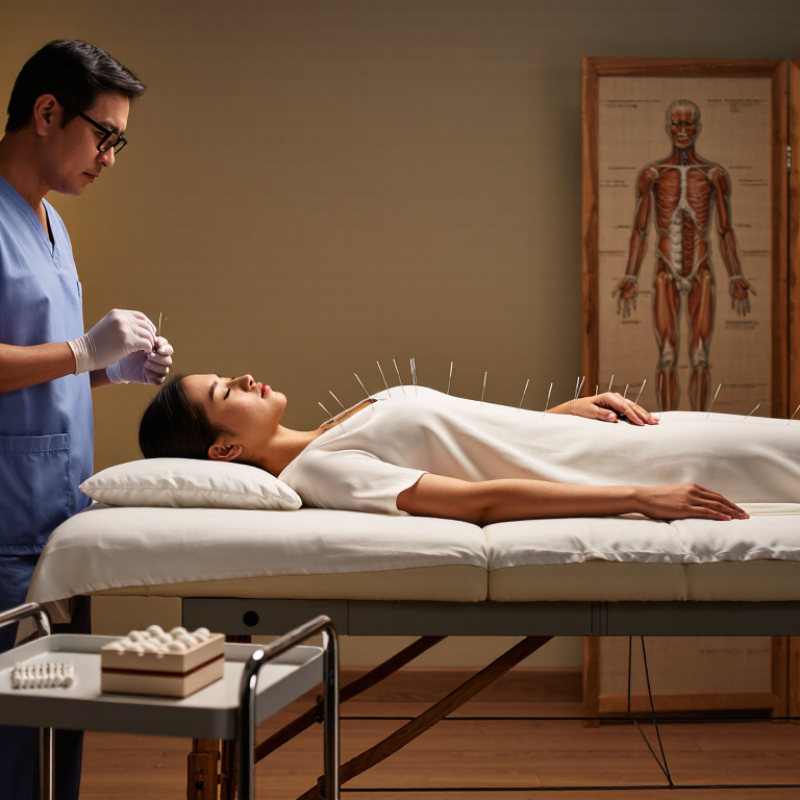
You normally lie comfortably on a treatment table. The practitioner cleans selected skin areas before inserting very thin, sterile, single-use needles. Common points include the arms, legs, back, or ears. You may feel a brief pinch, pressure, warmth, or a dull sensation. Some people feel relaxed quickly. Others notice little at first. That is normal.

The needles often remain in place for 15 to 30 minutes. During this time, quiet breathing can help you stay comfortable. A qualified practitioner should explain each step and adjust the treatment when needed. Minor bruising, tenderness, or temporary lightheadedness can occur. Serious problems are uncommon when proper hygiene and training are present.

Acupuncture should not be used to delay care for severe pain, infection, chest symptoms, or other urgent conditions. Tell the practitioner about pregnancy, bleeding disorders, implanted devices, and all medicines you use. Evidence for acupuncture varies by condition, so expectations deserve honesty. It may support symptom relief for some people, but results are not guaranteed. My own impression is that the session can feel less dramatic than expected. Steady communication matters more than mystery.

How Acupuncture May Affect the Body

Chinese acupuncture uses very thin, sterile needles at selected points on the body. Practitioners may choose points near painful areas or along traditional meridians. In a treatment room, people often notice warmth, mild pressure, or a brief tingling sensation. The needles usually remain in place for several minutes.

Modern research suggests acupuncture may affect the nervous system, muscles, and connective tissues. Needle stimulation can encourage the release of natural pain-regulating chemicals, including endorphins. It may also influence brain areas involved in pain, stress, and movement. Local stimulation can increase blood flow and relax tense muscles. The response differs from person to person.

Evidence is strongest for some conditions, such as chronic pain, migraine prevention, and nausea after certain medical treatments. Results are not always consistent, and acupuncture should not replace urgent medical care. A qualified practitioner should review your health history, medicines, pregnancy status, and bleeding risks. Sterile, single-use needles are essential.

The mechanism is still not fully understood. That matters. Traditional explanations and biomedical explanations do not perfectly match, yet both influence how treatment is discussed. Some people feel relief after one session, while others need several visits or notice little change. Keeping a symptom record can help separate genuine improvement from normal day-to-day variation.

Uses, Safety, and Possible Side Effects of Acupuncture

Chinese acupuncture is a traditional practice that inserts very thin needles into selected skin points. Practitioners describe these points through meridians, while modern research examines nerve signals, muscle activity, and pain processing. It may help some people with chronic back pain, neck pain, osteoarthritis, migraines, or treatment-related nausea. Results vary, and acupuncture is not magic. I once underestimated how much a calm consultation could affect the experience.

Safety depends on training and hygiene. Choose a qualified practitioner who uses sterile, single-use needles and explains the procedure clearly. Mild bruising, soreness, bleeding, or temporary dizziness can occur. Serious complications are uncommon, but improper technique may cause infection or deeper injury. Tell the practitioner about pregnancy, bleeding disorders, implanted electrical devices, skin infections, and all medicines you take. Acupuncture should complement appropriate medical care, not replace urgent evaluation or prescribed treatment.

Tips: Eat lightly before your appointment and drink water afterward. Wear loose clothing for easy access to treatment areas. Ask how needles are sterilized. Stop the session if you feel sharp pain, faintness, or unusual shortness of breath. Keep realistic expectations; improvement may require several sessions, and some people notice little change. Track symptoms, sleep, and daily function so you can judge benefits more honestly.

FAQS

What is Chinese acupuncture?

It is a traditional practice using very thin needles at selected skin points. Practitioners describe energy through pathways called meridians. Modern research examines nerves, connective tissue, and pain regulation.

What health problems might acupuncture help?

It may help some people with back pain, neck pain, osteoarthritis, migraines, or treatment-related nausea. Results differ between individuals. It is not a universal cure.

How does a practitioner decide where to place needles?

Traditional assessment may include sleep, digestion, emotions, pulse quality, and tongue appearance. The practitioner may also discuss your symptoms and medicines. The process is not perfectly mapped to modern anatomy.

Is acupuncture safe?

It can be safe when performed by a qualified practitioner. Single-use sterile needles and careful hygiene matter. Mild soreness, bruising, bleeding, or dizziness can occur.

What serious warning signs require attention?

Stop treatment if you feel sharp pain, faintness, or unusual shortness of breath. Seek medical advice for severe pain, unusual bleeding, or worsening symptoms. Rare problems can include infection or deeper injury.

What information should I tell the practitioner?

Mention pregnancy, bleeding disorders, skin infections, implanted electrical devices, and every medicine you take. Describe your symptoms clearly. Small details matter.

How can I prepare for an appointment?

Eat lightly before treatment and drink water afterward. Wear loose clothing around the treatment area. Ask how the needles are sterilized.

How should I judge whether acupuncture is helping?

Track pain, sleep, movement, nausea, and daily activities after each session. Some people need several sessions, while others notice little change. I once underestimated the value of a calm consultation. That experience still deserves reflection.

Conclusion

Chinese Acupuncture is a traditional healing practice rooted in the idea that the body’s vital energy flows through interconnected pathways. When this flow is believed to become unbalanced, carefully selected points may be stimulated with very thin, sterile needles to support the body’s natural regulation. Modern practitioners may also consider a person’s symptoms, medical history, lifestyle, and overall condition when developing an individualized treatment plan.

During a session, the practitioner typically discusses health concerns, examines relevant signs, and places needles at specific points while the patient rests comfortably. The needles may remain in place for a short period, sometimes with gentle movement or other appropriate stimulation. Research suggests that acupuncture may influence the nervous system, circulation, muscle tension, and the body’s pain-regulation processes. It is commonly used as a complementary approach for discomfort, stress, nausea, and certain chronic conditions. When performed by a qualified professional using sterile equipment, it is generally considered safe, though temporary soreness, bruising, dizziness, or minor bleeding can occur.


Liam

Liam

Liam is a dedicated marketing professional with a profound expertise in the industry, where he excels at highlighting the unique advantages of our core products. With a keen understanding of market trends and consumer needs, Liam frequently updates our company’s professional blog, providing......