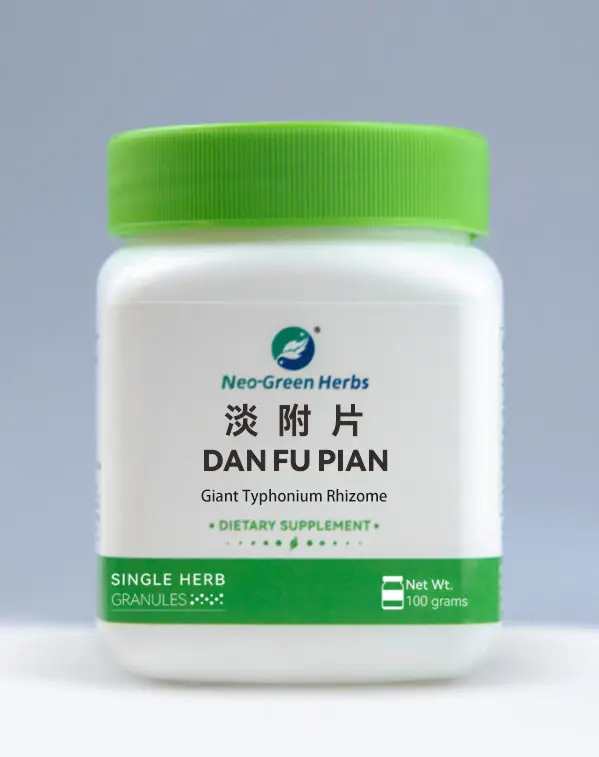
Single Herb Granules Giant Typhonium Rhizome

777_副本.jpg

Giant Typhonium Rhizome, an herb derived from the cotyledons of the buttercup plant aconite, is a highly respected herb in the field of traditional Chinese medicine. It is conical in appearance, with a subdued grayish-black color and a sunken bud mark at the top, as if it were a unique mark of nature. The cross-section is grayish-brown in color, and upon closer inspection, it can be found to be covered with small voids filled with salt cream, all of these subtleties highlight the unique medicinal properties and charms of the epiphyllum.
Product Description

Details and Efficacy of Giant Typhonium Rhizome

Giant Typhonium Rhizome is endowed with high medicinal value in Chinese medicine theory. Its flavor is pungent and sweet, and it belongs to the heart, kidney and spleen meridians. It has multiple effects, such as returning yang to rescue the rebellious, dispersing cold and relieving pain, and tonifying fire to help yang. In the clinical practice of traditional Chinese medicine, epiphyllum is often used to treat critical conditions such as death of yang and yang deficiency. When the body's yang energy is weak, yin and cold, cold extremities, pulse micro-periods and other critical situations, with its strong yang rescue power, can save the patient in distress, restore the body's yang energy, so that the fire of life to revitalize.
Giant Typhonium Rhizome is also an important medicine for warming yang and dispersing cold. It can invigorate the body's yang qi, dispel the body's cold evil, for yang deficiency caused by cold, cold limbs, lumbar and knee soreness, frequent urination at night and other symptoms have a significant improvement in the role of. It can warm up the fire of the life gate and restore the body's yang energy, thus improving yang deficiency and revitalizing the body.

Pain Relief and Cardiovascular Benefits

In addition to warming yang and dispersing cold, Giant Typhonium Rhizome also has a pain relieving effect. For joint pain, muscle pain and other conditions caused by wind-cold-damp paralysis, Radix et Rhizoma Polygoni Multiflori is capable of warming the meridians and collaterals, dispersing cold and relieving pain, and is often used in conjunction with cinnamon sticks, Rhizoma Atractylodis Macrocephalae, and other medicinal herbs to enhance the efficacy.
In addition, Giant Typhonium Rhizome has a certain cardiotonic effect. Modern medical research shows that Giant Typhonium Rhizome is able to enhance the contractility of the heart muscle and improve heart function, which has a certain auxiliary therapeutic effect on some patients with cardiac insufficiency. At the same time, it can also dilate blood vessels, improve blood circulation, for coronary heart disease, angina pectoris, etc.

Safety Precautions and Clinical Importance

Although Giant Typhonium Rhizome has a variety of effects and functions, it contains a certain degree of toxicity itself. Therefore, the dosage must be strictly controlled and standardized under the guidance of professional Chinese medicine practitioners. Overuse or improper use may lead to toxic reactions such as nausea, vomiting, palpitation and arrhythmia. In addition, pregnant women, lactating women, children and the physically weak should be cautious in using epiphyllum to ensure the safe and effective use of it.

Frequently Asked Questions

What are the primary medicinal properties of Giant Typhonium Rhizome?
It is primarily known for warming yang, dispersing cold, relieving pain, and its ability to rescue yang in critical conditions. It targets the heart, kidney, and spleen meridians.
Can it be used for joint and muscle pain?
Yes, it is often used for pain caused by wind-cold-damp paralysis as it warms the meridians and disperses cold effectively.
Does it have benefits for cardiovascular health?
Modern research suggests it can enhance heart muscle contractility and improve blood circulation, aiding in conditions like angina pectoris.
Is Giant Typhonium Rhizome toxic?
It contains a certain level of toxicity. Usage must be strictly supervised by a professional Chinese medicine practitioner to avoid adverse reactions.
Who should avoid using this herb?
Pregnant women, lactating women, children, and individuals who are physically weak should exercise extreme caution or avoid use.
What are the signs of improper dosage?
Symptoms of overuse may include nausea, vomiting, palpitations, and heart arrhythmia.

Related Products